
 |
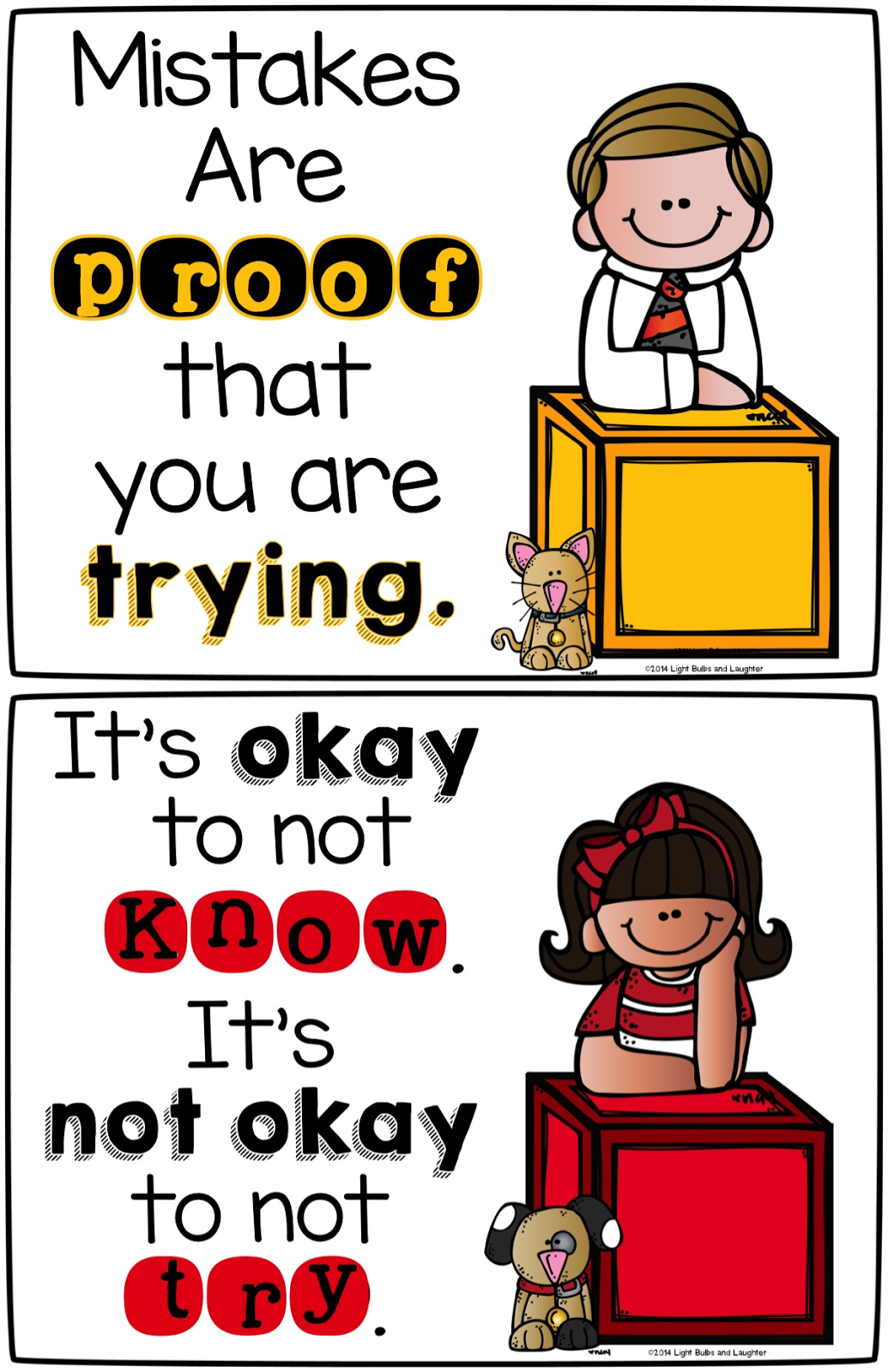
| Click on the picture for free download from TpT. |
Another place to gather information is also from your students. But now you have to get inside their brains, and find out how they assess their own learning. How in the world are we supposed to do this? And why is it important?
Let's tackle the importance question first. Studies show that students who are partners in their own assessment show increased engagement in all subject areas, and are more likely to become life-long learners. Also, students who are taught to analyze their own learning show increased motivation to learn.
Well, that's enough to convince me. It just makes sense, and I think we can agree that this is important. So the next question is, how do we do this? Here's the bad news. Most students don't walk into your classroom knowing how to assess themselves. In fact, many adults have trouble with metacognition.

Here's the good news. Metacognition can be explicitly taught. In fact, every teacher I know is already doing this (though perhaps we are not always aware of the fact that we are teaching metacognition. haha). We model reading strategies such as activating prior knowledge, summarizing, finding the meaning of a word through context, and stopping and rereading, just to name a few.
 |
| Click on picture to see Pin. |
Here's another great Pinterest idea. If you have not invested in a tap light, it is fabulous for modeling reading strategies! Just tap the light on when you stop reading to model what you are thinking. Run to Walmart and get one. You won't be sorry. The only downside is that students will remind you to use it every time you interrupt your read aloud. So if the phone rings in the middle of the book, be prepared for 26 voices to yell, "Turn on the light first!" when you go to pick up the phone.
When it comes to math, those of us teaching the Common Core State Standards are modeling the 8 Math Practice Standards (see that post, HERE). These practices are vital to teaching students to monitor their own mathematical thinking. We model ourselves not giving up, even when something is difficult to master (MP1), or looking for a shortcut (MP8), etc. (I have to share this... the other day, one of my students was struggling with a math concept. I asked him if he could find a shortcut to use. He looked up at me and said, "I'm going to use the long cut, because I really want to learn this.")
So what about metacognition as it relates to self assessment? Well, we have to model that, too. And here is where it gets fun. We get to model for our students that we make mistakes. All. The. Time. Then we walk them through the thought processes involved in fixing the mistakes. I want my students to see mistakes as something positive - as the poster says, mistakes are proof that you are trying! Here are some ideas:
- Model mispronouncing a word, catching yourself, and then correcting it.
- Make a mistake on a math problem. Model how to find the correct answer.
- Revise something. Decide (out loud) in the middle that it is not quite right. Then fix it.
- Stop in the middle of a sentence and ask, "What am I doing right now? Am I on task? What is my strategy for learning?"
 |
| © 2011 woodleywonderworks, Flickr | CC-BY | via Wylio |

- (So here you can see my own version of self assessment posters, a rubric, and cards for students to keep in/on their desks. There's also a notebook page. Click on the picture to take you to my TpT store and see for yourself, if you like.)
This process of going from 'not knowing' to 'trying' to 'understanding' to 'explaining' also has to be modeled for students. Here are some ideas:
- Model those mistakes, and why they are a good thing.
- Model that it's okay to ask for help.
- Model that everyone is different, and some people need more practice than others. (I use drawing for this one, because I'm terrible at it, but I still try. And I need lots of practice!)
- Model that being on #1 is not a bad thing. It just means that you haven't learned something yet. (I use the Spanish language for this example. Sometimes I don't even want to try, because I know I will make mistakes. About half of my third graders are bilingual, and when I mispronounce something, they let me know!)
- Model the difference between explaining how to do something and simply giving the answer.
I hope you can use the free posters at the beginning of this post, and I hope you will come back again to read some more. Next time, I'll show you my new KWL charts. And KWHL charts, too.
Happy Self Assessment and Metacognition,


